
 Africa
Moving to Uganda
The Pearl of Africa, with mountain gorillas, the source of the Nile, and a youthful, entrepreneurial population.
Non-EU
90 days (eVisa)
Medium
English (Official), Luganda, Swahili
Low-Medium
Do you need a visa to enter Uganda?
See the Uganda visa requirement, max stay, and key requirements for every passport — verified against official sources.
Check Uganda visa rulesCountry at a Glance
Uganda is a landlocked East African country of roughly 48 million people, sitting on the equator at a high enough altitude (Kampala is around 1,200 metres) to deliver a mild, green climate that belies the latitude. Winston Churchill once called it 'the Pearl of Africa', and the description still holds: the country contains the source of the White Nile at Jinja, the snow-capped Rwenzori Mountains on the border with the DRC, half of the world's mountain gorilla population in Bwindi Impenetrable Forest, chimpanzees in Kibale, and ten national parks in a country roughly the size of the UK. Kampala, the capital, is a sprawling city of hills, matatus, boda-bodas (motorcycle taxis), and an energetic youth-driven commercial culture - the median age is about 15, one of the youngest in the world. English is the official language and the medium of instruction from upper primary onwards, making daily expat life linguistically straightforward; Luganda dominates Kampala and the central region, Swahili is used in the security services and in trade, and dozens of other languages are spoken across the country. The economy runs on agriculture (coffee is the biggest export, plus tea, sugar, flowers, fish), services, oil (commercial production is building up around the Lake Albert fields and the EACOP pipeline to Tanga), and a fast-growing digital and fintech sector built on MTN Mobile Money and Airtel Money. Uganda is a comparatively stable and affordable base for the East African region, with Entebbe International Airport, strong NGO and development presence, and a warm, informal social culture - but newcomers should budget time for paperwork, traffic, and the reality that 'Kampala time' is flexible.
Relocation Realities
Unfiltered insights into daily life and structural realities.
Life & Economics
Solid middle-class lifestyle. High cost of living, especially rent. Strong purchasing power.
Housing Reality
Housing shortages in major cities. Strong tenant protections but hard to find places.
Work & Income
Strong labor laws, protected time off. Formal business culture. Local language often needed.
Taxes & Society
Complex tax systems with strong social benefits. Bureaucracy is heavy but functional.
Healthcare System
Insurance-based (public/private mix). High quality, accessible.
Living Environment – Transportation
Dense train networks (high speed). Cars often a liability in historic city centers.
Living Environment – Connectivity
Excellent. Central hubs (Frankfurt, Paris, Amsterdam) connect globally.
Climate & Seasons
Temperate. Grey winters, pleasant summers. Heatwaves becoming more common.
Travel & Leisure
City breaks by train, cultural tourism, and Mediterranean summers.
Visa & Legal Pathways Overview
Uganda's immigration system runs through the Directorate of Citizenship and Immigration Control, with a fully online eVisa portal and a lettered Class A-G work-permit framework keyed to sector. The country participates in EAC free movement and the joint East Africa Tourist Visa with Kenya and Rwanda, and hosts roughly 1.5 million refugees under one of the world's most progressive frameworks — granting the right to work, freedom of movement, and land allocation in settlements such as Bidi Bidi and Nakivale.
Official source: Directorate of Citizenship and Immigration Control (DCIC)East Africa Tourist Visa
Joint multi-entry visa with Kenya and Rwanda for USD 100, valid 90 days, issued at first point of entry into any of the three states.
EAC Free Movement
Citizens of EAC partner states enter visa-free on national IDs and access an Inter-State Pass plus common-market work and establishment rights.
Class B Investor Permit
Investor route registered through the Uganda Investment Authority (UIA), typically requiring a minimum capital threshold around USD 250,000 and a viable business plan.
Class G Work Permit
The most common employer-sponsored permit; sits alongside Class A (agriculture), C (NGO/religious), D (specified professions), E (manufacturing), and F (named employer).
Special Pass and Career Permit (A2)
Short-duration Special Pass up to three months for consultants and assignment work; Class A2 Career Permit covers specialised professionals on longer contracts.
Refugee Status and Settlement
Administered by the Office of the Prime Minister with UNHCR; refugees receive the right to work, freedom of movement, and a plot of land in settlements.
Specific Visa Types
East Africa Tourist Visa
90 days, multi-entryRegional Tourists
A joint multi-entry visa covering Uganda, Kenya, and Rwanda for USD 100. Issued at the first point of entry into any of the three countries and allows free movement between them during its validity. Practical for travellers combining gorilla trekking in Bwindi with the Maasai Mara and Volcanoes National Park.
Official InfoEAC Free Movement (Inter-State Pass)
Up to 6 months, renewableEast African Community Citizens
Citizens of EAC partner states (Kenya, Tanzania, Rwanda, Burundi, South Sudan, DRC, Somalia) enter Uganda visa-free using national IDs or passports and access an Inter-State Pass for stays up to six months. EAC nationals also benefit from common-market provisions on work and establishment, easing employer sponsorship for regional hires.
Official InfoWork Permit Class B (Investor)
1-3 years, renewableInvestors, Founders, UIA-Registered Businesses
For foreign nationals investing in mining, manufacturing, or other capital ventures, typically routed through the Uganda Investment Authority (UIA). UIA registration unlocks investor incentives and supports the work permit application; a minimum capital threshold (commonly USD 250,000) and a viable business plan are expected.
Official InfoWork Permit Class G (Specific Trade or Profession)
1-3 years, renewableEmployed Professionals, Skilled Workers
The most commonly issued employment permit, tied to a specific employer and role. Uganda also issues Class A (agriculture), C (religious/voluntary/NGO), D (specified professions), E (manufacturing), and F (named employer). Localisation rules require employers to demonstrate why a Ugandan cannot fill the role.
Official InfoSpecial Pass (Class A2 / Career)
Up to 3 months (Special Pass); 1-2 years (A2)Short-term Consultants, Specialised Professionals
A short-duration pass for consulting, training, or assignment work where a full work permit would be disproportionate. The related Career Permit (Class A2) covers specialised professionals in fields such as academia, medicine, and engineering on contracts longer than three months but shorter than a full Class G cycle.
Official InfoRefugee Status and Settlement
Status reviewed periodically; long-term settlement is the normAsylum Seekers, Refugees
Uganda hosts roughly 1.5 million refugees, the largest refugee population in Africa, mainly from South Sudan, the DRC, Burundi, and Somalia. Its policy framework is among the world's most progressive: refugees receive the right to work, freedom of movement, access to social services, and a plot of land in settlements such as Bidi Bidi, Nakivale, and Kyangwali. Status is administered by the Office of the Prime Minister with UNHCR support.
Official InfoWhere People Find Jobs & Income
Uganda's economy runs on agriculture (coffee is the largest export, followed by tea, fish, flowers, and dairy), services, construction, a growing oil and gas sector (development of the Lake Albert fields and the East African Crude Oil Pipeline), telecoms, and financial services. Expatriate roles concentrate in oil and gas (TotalEnergies, CNOOC Uganda, supporting contractors), NGOs and donor programmes (UN, USAID, FCDO, EU, GIZ, Irish Aid), international schools, banking and telecoms, and senior positions at multinational manufacturers and FMCG distributors.
Salary & Income Reality
"Salary structures vary significantly between local and international contracts. Senior expatriates on oil and gas or NGO contracts in Kampala often earn USD 60,000-180,000+ equivalent in total compensation, while local professional salaries are much lower in USD terms but stretch further in a lower-cost economy."
- • Personal income tax follows a progressive scale up to 40% on the highest brackets, withheld through PAYE by the employer.
- • NSSF (National Social Security Fund) contributions apply to both employee and employer - 5% employee and 10% employer of gross salary for covered employees.
- • Housing in preferred expatriate areas (Kololo, Nakasero, Bugolobi, Naguru, Munyonyo) ranges from USD 1,000-3,500+ per month for furnished 2-3 bedroom units, often payable in USD or USD-indexed UGX.
- • International school fees (International School of Uganda, Kampala International School Uganda, Rainbow International) typically run USD 8,000-20,000 per child per year.
Where People Actually Find Housing
How it works
Kampala's expatriate housing market is concentrated in Kololo (diplomatic heart, secure, central), Nakasero (central, hilly), Bugolobi (quiet, family-oriented), Naguru, Muyenga (views over Lake Victoria), and Munyonyo (lakeside, more suburban). Most expatriates rent standalone houses or apartments within gated compounds. Prices at the top end are quoted in USD, though payment can be negotiated in UGX at an agreed rate.
Expectations
Deposits of 1-3 months are common, and landlords often request 3-12 months of rent upfront, particularly for USD-indexed leases. Reputable agents (Knight Frank Uganda, Bageine & Company, RealCentre) or community word-of-mouth are more reliable than online-only listings. Always inspect the property, test water and power, confirm internet options, and verify the landlord's title before signing. Serviced apartments are commonly used for initial landings. Leases are typically 1-2 years, with annual rent often payable in advance for the year.
Healthcare Reality
Uganda's healthcare system is two-tiered. Public facilities, anchored by Mulago National Referral Hospital, handle the majority of Ugandans but are resource-constrained. Expatriates and higher-income residents use private hospitals and clinics: The Surgery (Dr. Dick Stockley's), International Hospital Kampala (IHK), Nakasero Hospital, and Case Medical Centre are the most commonly used for primary and specialist care. For complex or critical cases, medical evacuation to Nairobi, Johannesburg, or India is routine; virtually all expatriate insurance packages include evacuation cover. International insurance through Cigna, Bupa, AXA, UAP Old Mutual, or Jubilee Uganda is standard. Malaria is endemic throughout Uganda, including Kampala; prophylaxis for new arrivals and rapid treatment for long-term residents are the norm. Yellow fever vaccination is mandatory for entry. HIV rates remain significant, and standard precautions apply.
How Daily Life Is Managed Digitally
Uganda's digital life is built on mobile money and mobile internet. MTN Uganda and Airtel Uganda dominate the telecoms market, with Africell and a number of smaller players. MTN Mobile Money and Airtel Money are the primary payment rails for daily life. Fibre broadband from MTN, Liquid Intelligent Technologies, Roke Telkom, and others is available in Kampala and major towns. Starlink is available and increasingly popular for remote workers and upcountry residents.
Essentials:
Cultural Nuances
Ugandan culture is warm, social, and remarkably informal by regional standards. The country has over 50 ethnic groups, with the Baganda in the central region being the largest and Luganda the most widely spoken local language in Kampala. Religion plays a significant role: Uganda is predominantly Christian (a mix of Anglican/Church of Uganda, Catholic, and Pentecostal), with a significant Muslim minority and Hindu, Sikh, and other communities - a legacy of Indian commercial migration dating back to the 19th century. Social life is built around family, extended networks, and food; bringing food or a small gift when visiting is appreciated, and meals are an important relational event. Greetings are essential: 'Oli otya?' (How are you, Luganda), 'Ssebo/Nnyabo' (Sir/Madam) carry real weight, and rushing straight to business without greeting is considered abrupt. The crested crane is the national symbol and a source of pride. Ugandans often describe their own culture as 'nice' - a deliberately informal, hospitable, relationship-first tone that contrasts with some neighbouring countries' directness. For newcomers, the pace can feel casual on the surface but decisions often run on personal networks and trust rather than pure process.
- •Greetings before business. A relaxed 'Oli otya?' or 'How are you?' with time for an answer opens doors in ways direct transactional exchanges don't.
- •Share food where possible. Offering or accepting food and drinks when visiting is a core hospitality gesture.
- •Dress relatively conservatively in professional and rural settings. Kampala's young professional scene is more relaxed, but modesty is the default.
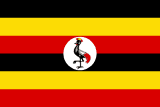
- •The crested crane is on the national flag and coat of arms. Casual insults of the crane or national symbols land badly.
- •'Kampala time' is flexible but not infinite. Meetings may start 15-30 minutes late but cultural expectations are not the same as 'don't show up on time'. Show up, be patient, and you will do well.
Local Administrative Requirements
Alien Identification Card
Foreign nationals resident in Uganda under a valid work or residence permit are issued an Alien ID through the Directorate of Citizenship and Immigration Control. It acts as a local identification document tied to the permit.
TIN (Tax Identification Number) with URA
Issued by the Uganda Revenue Authority (URA). Required for formal employment, business registration, property and vehicle transactions, and filing Ugandan-source income.
Bank Account
Opening a bank account requires your passport, work permit or dependant pass, Alien ID, TIN, proof of address, and often an employer or referee letter. Major banks include Stanbic Bank Uganda, Absa Bank Uganda, Standard Chartered Uganda, Centenary Bank, Equity Bank Uganda, DFCU, and KCB Bank Uganda.
Mobile Money (MTN MoMo / Airtel Money)
Mobile money dominates everyday payments in Uganda. MTN Mobile Money (MoMo) and Airtel Money are the two major platforms, with SIM registration tied to your passport and Alien ID.
Travel & Mobility
Mobility & Exploration
Getting Around
Kampala's transport mix is dominated by matatus (minibus taxis), boda-bodas (motorcycle taxis), and private cars. SafeBoda is the leading app for safer motorcycle taxi rides, with helmets, insurance, and trackable trips; Uber, Bolt, and Faras cover car ride-hailing. Traffic in Kampala is severe; corridors like Jinja Road, Entebbe Road, Northern Bypass, and Kampala Road can grind to a halt at peak hours. The Kampala Flyover project has opened new routes around the city centre and is easing some bottlenecks. Intercity travel uses coach lines (Post Bus, Link, Jaguar) to major towns including Jinja, Masaka, Mbarara, Gulu, and Fort Portal, and domestic flights via Aerolink Uganda and Bar Aviation serve the national parks (Bwindi, Kidepo, Murchison Falls, Queen Elizabeth). The Standard Gauge Railway has been discussed for years but full passenger operations are not yet in place.
Connections
Entebbe International Airport (EBB), 40km south of Kampala on the shores of Lake Victoria, is Uganda's only international airport. Uganda Airlines is the national carrier, operating direct flights to Nairobi, Dar es Salaam, Kigali, Johannesburg, Mumbai, Dubai, Mogadishu, and Lagos. Other carriers serving EBB include Kenya Airways, Ethiopian Airlines, Emirates, Qatar Airways, Turkish Airlines, KLM (seasonal), Brussels Airlines, RwandAir, and EgyptAir. Flight time to Nairobi is about 1 hour, to Dubai 5 hours, to London 9 hours (typically via the Gulf or Nairobi). The Kampala-Entebbe Expressway connects the capital to the airport in about 30-45 minutes, depending on traffic.
Exploration
Uganda's natural wealth is extraordinary for a country of its size. Bwindi Impenetrable Forest is home to roughly half of the world's remaining mountain gorillas; permits are expensive (USD 800 for foreign non-residents) but the experience is regularly described as life-changing. Kibale Forest has the highest chimpanzee density in East Africa. Queen Elizabeth National Park hosts tree-climbing lions and a dense game population, and Murchison Falls is where the Nile squeezes through a 7-metre gap and thunders into a gorge. Kidepo Valley, in the remote northeast, is often described as one of Africa's most beautiful wilderness parks, and the Rwenzori Mountains offer serious mountaineering above 5,000 metres. The source of the Nile at Jinja is a classic weekend escape with rafting and bungee jumping, and Lake Bunyonyi near the Rwanda border is a popular quiet retreat. Kampala itself offers the Uganda Museum, the Kasubi Tombs (UNESCO), and a nightlife scene that runs late.
Important Considerations
Traffic: Kampala's jam is a lifestyle factor. Choose housing, schooling, and routines with commute reality in mind, not just map distance.
Malaria: endemic in Kampala and nationwide. Prophylaxis for new arrivals, repellent, and treated nets are standard.
Political sensitivity: public criticism of the president or security forces can carry real legal consequences. Social media posts by residents have been the basis for investigations. Exercise judgment.
LGBTQ+ legal environment: Uganda's Anti-Homosexuality Act 2023 imposes severe penalties and is a major consideration for LGBTQ+ expatriates. Consult your embassy and legal advisors before relocating.
Road safety: boda-bodas are fast and frequent but cause a high share of accidents. Use helmets, stick to app-based services like SafeBoda, and avoid riding at night where possible.
Common Mistakes to Avoid
Skipping the alien ID. It is what unlocks resident rates at national parks and is expected by most offices. Get it as soon as your work permit is issued.
Walking into Kampala meetings without greetings. Jumping straight to 'so about the contract...' lands awkwardly. Take thirty seconds to ask about weekends and family first.
Relying only on card payments. Mobile money is the default everywhere from fuel stations to roadside shops. Activate it on day one.
Ignoring malaria prophylaxis in Kampala on the assumption that altitude protects. Kampala is malarial; take precautions until you and your doctor agree on a long-term approach.
Photographing military and police installations or personnel. This causes real problems. Ask first, or simply don't.
Service Directory - Uganda
Immigration Lawyers
Law firms handling work permits, investor permits, and corporate immigration compliance.
Real Estate Agents
Agencies handling rentals and sales in Kampala's expatriate neighbourhoods.
Accountants & Tax Advisors
Advisors experienced with URA compliance, PAYE, VAT, and cross-border structures.
Moving Companies
International relocation providers handling household goods through Kampala and Mombasa port.
Language Tutors
Luganda and Swahili language training and cultural orientation.
Healthcare Providers
Private clinics and hospitals commonly used by expatriates in Kampala.
Job Placement Agencies
Recruitment platforms and search firms placing professionals with Ugandan employers.
Emergency Services
Police
National police emergency number. Also accessible as 112 from mobile phones. Strongest response times in Kampala and major urban centres.
Kampala Rapid Response
Kampala-centric rapid response line operated by the Uganda Police Force. Useful for urban emergencies in the capital.
Mobile Emergency
Alternative emergency number accessible from mobile phones, including without a registered SIM.
Official Sources & Further Reading
Directorate of Citizenship and Immigration Control
The authority responsible for visas, work permits, special passes, and Alien ID cards in Uganda.
Uganda eVisa Portal
Official portal for tourist eVisas, work permit applications, and other immigration-related online services.
Uganda Revenue Authority (URA)
Manages TIN registration, PAYE, VAT, and tax filing for individuals and businesses.
Uganda Investment Authority (UIA)
Handles investor registration, incentives, and investor-linked permit support.
Consular Services
For consular assistance, passport services, and official guidance related to Uganda, consult the Ugandan Ministry of Foreign Affairs or a Ugandan embassy or consulate abroad.
Related Country Guides
Similar destinations you might also consider.


Take this guide with you
The GoMate App is in active development. Join the waitlist to get a personalized Uganda relocation plan when we launch.