 Europe
Moving to Sweden
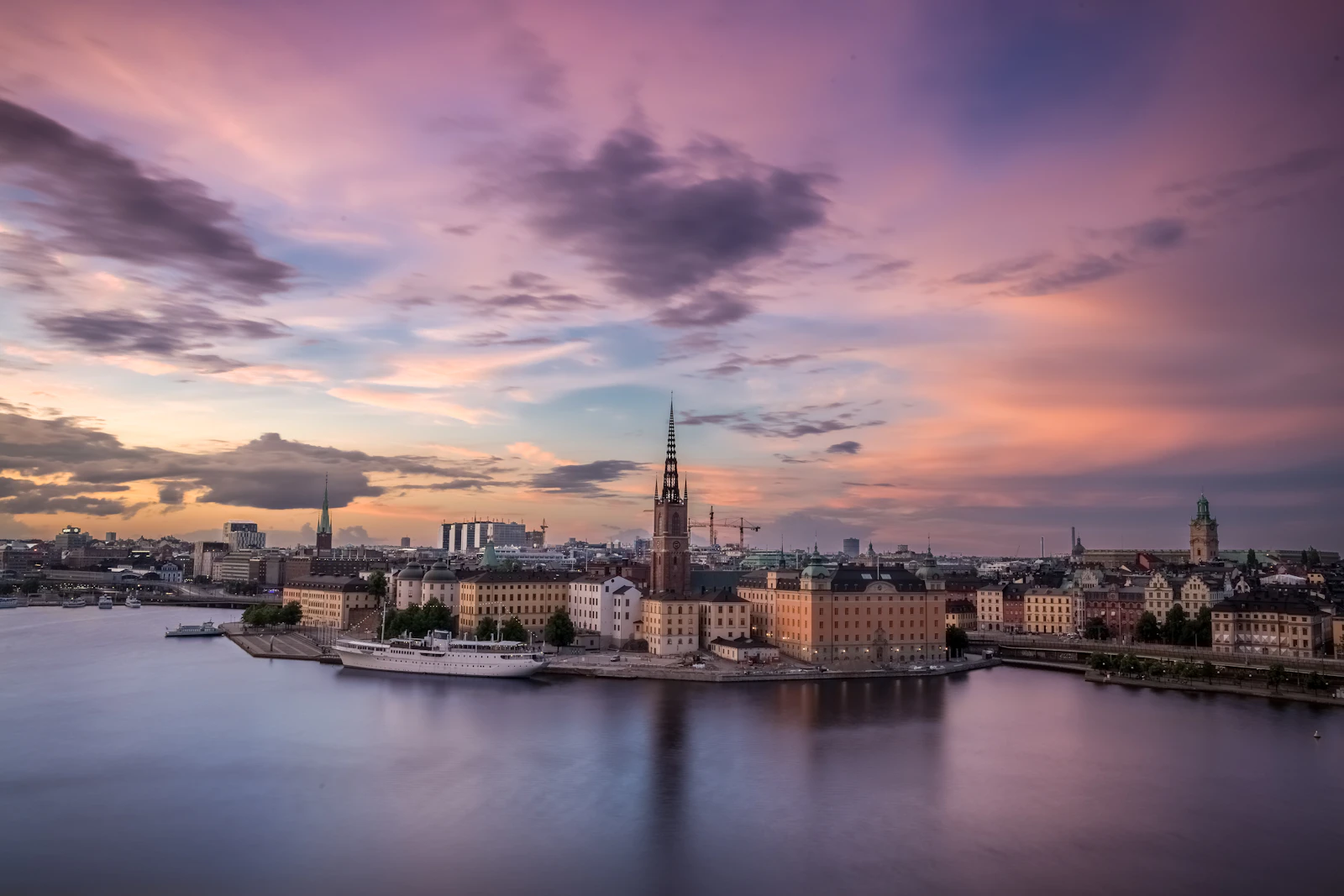
Innovation meets nature in this organized, progressive Nordic nation.
EU Member
Up to 90 days (Schengen)
Low
Swedish (Official), English (Widely spoken)
High
Do you need a visa to enter Sweden?
See the Sweden visa requirement, max stay, and key requirements for every passport — verified against official sources.
Check Sweden visa rulesCountry at a Glance
Sweden is a society built on the twin pillars of individual autonomy and collective responsibility. It is highly modernized and digital — cash is nearly extinct, and almost all interaction with the state happens online through BankID-authenticated portals — yet it remains deeply connected to the natural world through the concept of 'allemansrätten' (the right of public access), which allows anyone to walk, camp, and forage on any land, even privately owned, as long as they cause no damage. Daily life is structured, punctual, and efficient. The famous 'Swedish Model' extends beyond economics to social trust: citizens trust the state to provide cradle-to-grave welfare (parental leave of 480 days per child, universal healthcare, free university education), and the state trusts citizens to contribute through high taxes without excessive enforcement. The culture of 'lagom' — just the right amount, not too much, not too little — permeates everything from portion sizes to salary expectations to social behavior. For newcomers, the country feels incredibly safe, clean, and functional, but often socially reserved. Swedes are polite, speak excellent English, and are helpful when asked, but they rarely initiate contact with strangers. Building genuine friendships requires patience, shared activities, and the understanding that Swedish social life is planned weeks in advance — spontaneous 'drop by' visits are unwelcome. The housing crisis in Stockholm is severe, with first-hand rental queues exceeding 10-15 years, and the Personnummer (personal identity number) acts as a gatekeeper to virtually every service in the country.
Who This Country Is For
For those who value equality, nature, and work-life balance over career aggression or luxury consumerism.
Relocation Realities
Unfiltered insights into daily life and structural realities.
Life & Economics
High salaries are balanced by high taxes and living costs. Savings potential is moderate unless you live frugally. Credit is essential for housing.
Housing Reality
Extremely difficult in major cities due to regulated rental queues (10+ years). Newcomers rely on expensive, short-term second-hand sublets.
Work & Income
Flat hierarchy, consensus-driven. English is widely used in tech/business. Finding a job without Swedish is possible but harder outside tech.
Taxes & Society
High taxes feel justified by free education, subsidized childcare, and healthcare. The system feels secure but sometimes impersonal.
Healthcare System
High quality but slow access for non-emergencies. Long wait times for specialists. Patient fees are capped and low.
Living Environment – Transportation
Excellent public transport in cities. Trains connect the country but can be pricey. Cars are needed in rural north.
Living Environment – Connectivity
Stockholm Arlanda is a major hub. Ferries to Finland/Baltics are popular. easyJet/Ryanair serve many cities.
Climate & Seasons
Darkness in winter is the hardest challenge. Summers are magical with nearly 24h light in the north. SAD is a real risk.
Travel & Leisure
Swedes escape to 'sommarstuga' (summer cottages) by lakes. Hiking, skiing, and berry picking are standard weekend activities.
Visa & Legal Pathways Overview
Most long-stay options require employment, studies, or family ties. Tourist stays cannot be converted to work or residence permits in-country.
Official source: MigrationsverketWork Permit
Requires a job offer from a Swedish employer. Employer must advertise the position in the EU first. Applied for before entry.
EU Blue Card
For highly qualified workers with a university degree and a job offer meeting a salary threshold.
Residence Permit for Studies
For university-level education. Proof of admission and sufficient funding required.
Family Reunification
For spouses, partners, and children of Swedish residents or permit holders.
Working Holiday Visa
For young adults (18–30) from selected countries (Australia, New Zealand, South Korea, etc.). Up to 1 year.
Specific Visa Types
Work Permit (Arbetstillstånd)
Up to 2 years (renewable, path to permanent residency after 4 years)Non-EU Workers with a Job Offer
For non-EU/EEA citizens with a confirmed job offer from a Swedish employer. The employer must advertise the position in Sweden and the EU for at least 10 days. Since 1 June 2026, the role must pay at least 90% of the Swedish median salary (SEK 34,470/month as of the June 2026 update, based on a median of SEK 38,300; recalculated annually each June) and provide conditions equivalent to Swedish collective agreements. A lower 75%-of-median threshold (SEK 28,725/month) applies to a defined list of exempted occupations, including IT technicians, healthcare assistants, and agricultural and welding roles, and to former students, researchers, and staff of qualifying early-stage tech and life-science companies. Extension applications filed between 1 June and 1 December 2026 may still use the previous, lower threshold. Processing times at Migrationsverket average two to six months. Since 13 July 2026, Migrationsverket also applies a good-conduct (vandel) assessment to anyone applying for or holding a residence permit: unpaid debts, inaccurate information given as the basis for social insurance or other benefits, threats to public order, or contact with criminal, terrorist, or extremist organisations can lead to a permit being refused or revoked, although isolated minor incidents are normally not enough. From 1 October 2026, under Proposition 2025/26:301 (adopted by the Riksdag on 13 August 2026), a sponsor who holds a time-limited residence permit must as a rule have lived in Sweden with a residence permit for at least two years before a family member can be granted a permit on the basis of that tie. Work permit holders, researchers and doctoral students are exempt from that waiting period. The same law raises the maintenance requirement for family immigration and extends it to applications for a continued residence permit, so the income and housing test has to be met again at each renewal rather than only at the first application.
Official InfoEU/EEA Registration
Indefinite (as long as conditions are met)EU/EEA Citizens
EU/EEA citizens have the right to live and work in Sweden without a permit. However, to access public services, you must register with Skatteverket (Tax Agency) for population registration (folkbokföring) and obtain a Personnummer. This requires proof of employment, self-employment, or sufficient funds and health insurance.
Official InfoSchengen Visa (Type C)
Up to 90 days within a 180-day periodTourists, Short-term Business Visitors
For non-EU citizens requiring a visa to enter the Schengen area for tourism, family visits, or short business meetings. Applied for at the Swedish embassy or VFS Global center.
Official InfoWorking Holiday Visa
Up to 1 year (non-renewable)Young Adults (18-30)
Available to citizens of Australia, New Zealand, South Korea, Japan, Canada, Chile, Argentina, and Hong Kong. Allows work and travel in Sweden for up to one year. Requires proof of sufficient funds and return transportation.
Official InfoSelf-Employment Permit
Up to 2 years (renewable)Entrepreneurs, Freelancers
For non-EU/EEA nationals who want to run their own business in Sweden. Requires a viable business plan, sufficient funding (at least SEK 200,000), relevant experience, and proof that the business can support you financially. Processing is thorough and can take several months.
Official InfoResidence Permit for Higher Education Studies
Length of study program (renewable)Non-EU/EEA Students Admitted to Swedish Universities
For non-EU/EEA nationals admitted to full-time study at a Swedish university or university college. Under rules effective 11 June 2026, permit holders may work up to 15 hours/week during semesters (unlimited during June, July, and August), must complete at least 37.5 credits in their first year and 45 credits per year from the second year onward to keep the permit, and must notify Migrationsverket of their address within 30 days of receiving the permit or of any later address change. Switching to another permit type, such as a work permit, generally requires having completed at least two semesters at a Swedish university or university college. Students who received their permit before 11 June 2026 keep the old rules until they apply for an extension.
Official InfoSwedish Citizenship (Medborgarskap)
Permanent (citizenship once granted)Long-term Residents Planning Permanent Settlement
Under the Citizenship Act revised with effect from 6 June 2026, most non-EU/EEA applicants must demonstrate 8 years of continuous legal residence. Shorter periods apply to: Nordic citizens and former Swedish citizens (2 years); stateless persons (5 years); refugees, spouses or cohabitants of Swedish citizens, and applicants under 21 (7 years). All applicants must show self-sufficiency — income of at least approximately SEK 20,000/month (3 income base amounts per year) from non-subsidised employment or self-employment, with no means-tested income support for more than 6 months in the preceding 3 years. A civic knowledge test is required from August 2026; a Swedish language test will follow at a date to be announced by Migrationsverket. Applications not yet decided as of 6 June 2026 are assessed under the new rules regardless of when they were filed.
Official InfoWhere People Find Jobs & Income
Sweden has a stable, innovation-driven economy with global leaders in tech (Spotify, Klarna, Ericsson, King), automotive (Volvo, Scania), pharmaceuticals (AstraZeneca), and retail (IKEA, H&M). The labor market is highly unionized (approximately 70% union membership), and collective agreements (kollektivavtal) set wages and working conditions in most sectors. Hiring is structured, reference-driven, and often slow.
Salary & Income Reality
"Swedish salaries are transparent and relatively compressed — the gap between high and low earners is narrower than in most countries. The median monthly salary is approximately SEK 36,000 (EUR 3,200) before tax. There is no statutory minimum wage; minimums are set by collective agreements. High marginal tax rates (municipal tax of 29-35% plus state tax of 20% on income above SEK 613,900) mean that net pay is significantly lower than gross figures suggest."
- • A gross salary of SEK 45,000/month yields approximately SEK 33,000-35,000 net after municipal tax (no state tax at this level). Use ekonomifakta.se or skatteverket.se salary calculator to estimate your take-home.
- • Employer social contributions (arbetsgivaravgifter) add approximately 31.42% on top of your gross salary — paid by the employer, not deducted from your pay. This funds pension, health insurance, unemployment insurance, and parental leave.
- • Occupational pension (tjänstepension) is a significant part of total compensation. Under collective agreements, employers contribute 4.5-30% of salary depending on the scheme and your earnings level. Always factor this in when comparing offers.
- • The salary gap between Stockholm and smaller cities (Malmö, Gothenburg, Linköping, Umeå) is smaller than in many countries, but Stockholm's housing costs dramatically reduce the purchasing power advantage.
Where People Actually Find Housing
How it works
Sweden's housing market is one of its most challenging aspects for newcomers. First-hand rental contracts (förstahandskontrakt/hyresrätt) in Stockholm, Gothenburg, and Malmö are allocated through municipal housing queues — Bostadsförmedlingen in Stockholm has over 700,000 registered applicants, and average wait times for a central Stockholm apartment exceed 10-15 years. Most newcomers rely on regulated second-hand sublets (andrahandsuthyrning), purchasing a bostadsrätt (co-operative apartment, requiring a 15% down payment), or renting privately through platforms. Popular areas in Stockholm include Södermalm for its bohemian character, Vasastan for families, Kungsholmen for professionals, and Solna and Sundbyberg for more affordable options. In Gothenburg, Linné and Haga are popular central neighborhoods; in Malmö, Möllevångstorget and Västra Hamnen.
Expectations
Expect intense competition and the need for patience. Second-hand sublets typically require one to three months' rent as deposit. Scam prevention is critical: never pay rent before viewing the property and verifying the subletter's identity and right to sublet (they need written permission from their landlord or bostadsrättsförening). Platforms include Blocket Bostad, Qasa, and Bostadsdirekt. Furnished sublets are common but more expensive. Purchasing a bostadsrätt requires mortgage pre-approval, a 15% down payment, and approval by the housing cooperative (bostadsrättsförening).
Healthcare Reality
Sweden's public healthcare system provides high-quality care funded through taxes. You access the system through your local vårdcentral (health center), where you register as a patient once you have a Personnummer. GP visits cost SEK 200-350, specialist visits SEK 350-400, and hospital stays SEK 120/day. There is an annual co-payment cap (högkostnadsskydd) of SEK 1,300, after which all care is free for the rest of the 12-month period. Prescription medications have a separate annual cap of SEK 2,800. Emergency care is available 24/7 at hospitals including Karolinska Universitetssjukhuset in Stockholm (one of Europe's premier research hospitals), Sahlgrenska Universitetssjukhuset in Gothenburg, and Skånes Universitetssjukhus in Malmö/Lund. The 1177 Vårdguiden helpline and website provide 24/7 medical advice in Swedish (English-speaking nurses available in some regions). Wait times for non-urgent specialist care (dermatology, orthopedics, mental health) can be long — three to six months is not uncommon, which is why many employers offer private healthcare supplementary insurance (privatsjukvårdsförsäkring) as a benefit.
How Daily Life Is Managed Digitally
Sweden is one of the world's most cashless and digitally integrated societies. Virtually all public and private services are accessible online, authenticated through BankID. Physical cash is accepted at fewer and fewer places — many shops, restaurants, and even street vendors display 'Vi tar inte kontanter' (we do not accept cash) signs. The country's digital infrastructure is excellent, but it assumes you already have a Personnummer and BankID.
Essentials:
Cultural Nuances
Swedish culture is defined by 'lagom' (just the right amount — not too much, not too little) and a pervasive respect for personal space, consensus, and work-life balance. Hierarchies are almost invisible: bosses are addressed by first name, meetings seek consensus rather than top-down decisions, and individual status displays are met with quiet disapproval rather than admiration. Fika — the daily coffee break, typically with a pastry (kanelbulle/cinnamon bun is the classic) — is not optional; it is a social ritual that lubricates workplace relationships and friendships alike. Declining a fika invitation can be perceived as antisocial. Swedes speak excellent English but socialize primarily in Swedish, and breaking into established social circles can take years. The most reliable entry points are organized activities: sports clubs (föreningar), language exchange meetups, and volunteer organizations.
- •Fika is sacred: the daily coffee ritual (usually mid-morning and mid-afternoon) is a core social institution. In workplaces, skipping fika signals that you do not value the team. Always join.
- •Lagom governs everything: moderation is the ideal. Taking too much food at a shared meal, talking too loudly, or bragging about achievements all violate the lagom principle. Understatement is preferred.
- •Punctuality is absolute: arriving at 10:03 for a 10:00 meeting is noticed and silently judged. Swedes plan schedules precisely and expect others to do the same.
- •Remove shoes when entering any home. This is universal and non-negotiable in Sweden. Hosts may provide guest slippers (tofflor).
- •Allemansrätten (Right of Public Access): you can walk, camp, and pick berries or mushrooms on any land — including private property — as long as you do not damage crops, gardens, or approach within sight of a home. This right is treasured and taken seriously.
Local Administrative Requirements
Personal Identity Number (Personnummer)
The ten- or twelve-digit number (YYMMDD-XXXX) is the absolute core of Swedish society. It is assigned by Skatteverket upon population registration (folkbokföring) and tracks everything from healthcare records to tax payments, gym memberships, and library cards.
Population Registration (Folkbokföring)
Registering as a resident in Sweden with Skatteverket (the Swedish Tax Agency). This is the step that establishes you as living in Sweden (not just visiting) and is what triggers access to a Personnummer. You must visit a Skatteverket office in person with your passport, work permit or EU right of residence documentation, employment contract, and proof of your Swedish address.
Swedish ID Card (Identitetskort)
Once you have a Personnummer, you must book an appointment at Skatteverket to apply for a physical ID card. Bring your passport and proof of Personnummer. The card takes two to three weeks to produce and must be picked up in person.
BankID
A digital identification app installed on your smartphone, issued through a Swedish bank once you have a Swedish ID card and bank account. Used to log into your bank, Skatteverket (tax), Försäkringskassan (social insurance), 1177 Vårdguiden (healthcare), digital mailboxes (Kivra), and to sign contracts, verify purchases, and vote in referendums.
Travel & Mobility
Mobility & Exploration
Getting Around
Stockholm's public transport (SL — Storstockholms Lokaltrafik) includes the Tunnelbana metro (three lines, 100 stations, many with famous art installations), commuter trains (Pendeltåg), buses, trams, and ferries. The SL Access card or SL app provides zone-based ticketing. Gothenburg has an extensive tram network (Västtrafik), and Malmö relies on buses and the Citytunnel regional rail connection to Copenhagen. Between cities, SJ (Statens Järnvägar) operates high-speed X2000 trains: Stockholm to Gothenburg takes approximately three hours, Stockholm to Malmö about 4.5 hours. Budget alternatives include FlixBus and Vy (formerly Nettbuss). Cycling is a primary mode of transport in all Swedish cities — dedicated bike lanes are well-maintained, and bike rental systems (Stockholm City Bikes) are widely used. Driving is common outside urban areas; Swedish roads are well-maintained but winter driving requires studded or studless winter tires from December 1 to March 31 (or when winter conditions exist). The Öresund Bridge connects Malmö to Copenhagen, making cross-border commuting common.
Connections
Stockholm Arlanda Airport (ARN) is Sweden's primary international hub, with direct flights across Europe, to North America (New York, Chicago, Los Angeles, Miami via SAS), Asia (Bangkok, Tokyo, Beijing), and the Middle East. Gothenburg Landvetter Airport (GOT) handles European traffic and select long-haul routes. Malmö Sturup Airport (MMX) serves regional routes, while many Malmö residents use Copenhagen Kastrup Airport (CPH), just 20 minutes by train across the Öresund Bridge. SAS (Scandinavian Airlines) is the flag carrier and Star Alliance member. Norwegian Air Shuttle and budget carriers like Ryanair, Wizz Air, and Eurowings serve European routes from multiple Swedish airports. Flight time to London is approximately 2.5 hours; to New York, roughly 8.5 hours.
Exploration
Sweden offers extraordinary natural diversity: the Stockholm Archipelago (30,000 islands accessible by ferry), the ice hotel in Jokkmokk and Kiruna in Swedish Lapland, the Northern Lights (visible from October through March above the Arctic Circle), the medieval walled city of Visby on Gotland (UNESCO World Heritage), the hiking trails of Kungsleden (the King's Trail, 440 km through Arctic wilderness), and the forests and lakes of Dalarna (traditional Swedish heartland with midsummer celebrations). Stockholm's Gamla Stan (Old Town), Vasa Museum (a preserved 17th-century warship), and Skansen open-air museum are world-class cultural attractions. The Icehotel in Jukkasjärvi, rebuilt entirely from ice each winter, is a unique experience. Weekend trips to Copenhagen (35 minutes by train from Malmö), Oslo (6 hours by train from Stockholm), and Helsinki (overnight ferry from Stockholm) are popular Nordic escapes.
Important Considerations
The 'Banking Catch-22': You need a bank account to get BankID. You need a Swedish ID card to open a bank account. You need a Personnummer to get the ID card. You need a registered address and employment to get a Personnummer. This dependency chain can take three to six months to complete. Plan for this period with a functional international debit card, a prepaid Swedish SIM, and patience.
Housing Crisis: First-hand rental contracts in Stockholm require 10-15 years in the municipal queue (Bostadsförmedlingen). Gothenburg and Malmö queues are shorter but still multi-year. Most newcomers rely on expensive second-hand sublets (andrahandsuthyrning) at SEK 10,000-18,000/month for a one-bedroom in Stockholm, or they purchase a bostadsrätt (cooperative apartment) with a 15% down payment.
Winter Darkness: In Stockholm, the sun rises at approximately 8:40 AM and sets at 2:50 PM at the winter solstice. In Kiruna (northern Sweden), the polar night means no sunlight at all for several weeks in December-January. Seasonal Affective Disorder is widely acknowledged — most Swedes take Vitamin D supplements, use daylight therapy lamps, and actively seek outdoor light during the limited daylight hours.
Cashless Society: Sweden is further along the cashless transition than almost any other country. Many shops, cafes, public toilets, and laundromats do not accept cash. Even church collections and flea markets use Swish. If you do not have a Swedish bank account with Swish and BankID, carry an international Visa or Mastercard at all times.
Systembolaget (Alcohol Monopoly): Beverages above 3.5% ABV are sold exclusively at Systembolaget, the state-run liquor monopoly. Stores close at 7:00 PM on weekdays, 3:00 PM on Saturdays, and are closed on Sundays and public holidays. Prices are high by international standards. Plan your purchases ahead, as there are no alternatives.
Common Mistakes to Avoid
Assuming you can find an apartment after arrival. You must secure temporary housing (an Airbnb, a friends' couch, or a short-term sublet) for at least one to two months before arriving. Searching for housing remotely using Blocket, Qasa, and Facebook groups should start weeks before your move date.
Underestimating Skatteverket processing times. Getting a Personnummer can take four weeks to four months depending on caseload, documentation completeness, and the time of year. Autumn (August-October) is the busiest period due to international students and new employees arriving simultaneously.
Trying to socialize spontaneously. Swedes plan social activities weeks in advance. 'Want to grab coffee sometime?' means you should propose a specific date. Showing up at someone's home unannounced is a serious social violation. Make friends through organized activities: sports clubs (föreningar), language cafés, and meetup groups.
Walking in the bike lane. Swedish cities have clearly marked bike lanes (cykelbanor) separated from pedestrian paths. Stepping into the bike lane will trigger aggressive bell-ringing, shouted warnings, and occasionally near-collisions. Cyclists move fast and expect the lane to be clear.
Ignoring the queue culture. Swedes are meticulous about queuing. Many shops, pharmacies (Apotek), and service centers use a ticket number system (nummerlapp). Taking a number and waiting your turn is absolute. Skipping or even appearing to skip the queue provokes visible displeasure.
Service Directory - Sweden
Immigration Lawyers
Legal assistance for work permits, residence permits, EU registration, and immigration appeals.
Real Estate Agents
Platforms and agencies for purchasing bostadsrätter (cooperative apartments) and finding rental sublets.
Accountants & Tax Advisors
Experts on Swedish tax rules, employer social contributions, and cross-border income.
Moving Companies
International and domestic relocation services including packing, shipping, and storage.
Language Tutors
Swedish language courses, from government-funded SFI for immigrants to private intensive programs.
Healthcare Providers
Public healthcare portals and private healthcare providers for clinics, specialists, and diagnostics.
Job Placement Agencies
Public employment services and recruitment firms connecting professionals with Swedish employers.
Emergency Services
National Emergency (SOS Alarm)
Police, ambulance, fire, and rescue. Operated by SOS Alarm. Available 24/7. Operators speak Swedish and English. Works from any phone, including locked devices without a SIM card.
Police (Non-Emergency)
For reporting crimes that are not in progress, providing tips, or making general inquiries to the Swedish Police (Polisen). Available 24/7.
Healthcare Advice (Vårdguiden)
24/7 medical advice line staffed by registered nurses. They assess your symptoms and direct you to the appropriate level of care: self-care, vårdcentral (GP), or emergency room. Also available as a comprehensive healthcare website and app.
Official Sources & Further Reading
Migrationsverket (Swedish Migration Agency)
The authority responsible for all work permits, residence permits, asylum applications, and citizenship in Sweden. The definitive source for visa requirements and processing times.
Skatteverket (Swedish Tax Agency)
Handles population registration (folkbokföring), Personnummer issuance, Swedish ID cards, tax returns, and tax deduction tables.
Försäkringskassan (Swedish Social Insurance Agency)
Administers parental leave (föräldrapenning), sick pay, child benefits (barnbidrag), housing allowance, and other social insurance benefits.
Krisinformation.se
Emergency information portal from Swedish authorities. Provides real-time updates during crises, severe weather, and public safety threats.
Migrationsverket — New Rules for Higher Education Residence Permits (2026)
Official notice on the work-hour cap, credit-progress requirements, address notification rule, and permit-switching conditions for higher-education residence permits, effective 11 June 2026.
Migrationsverket — Good Conduct (Vandel) Requirement for Residence Permits (2026)
Official notice on the good-conduct (vandel) assessment in force from 13 July 2026, under which Migrationsverket can refuse or revoke residence permits over unpaid debts, inaccurate benefit information, threats to public order, or contact with criminal, terrorist, or extremist organisations.
Migrationsverket — New Rules for Work Permits (2026)
Official notice confirming that, from 1 June 2026, work-permit salaries must reach at least 90% of the national median salary (75% for exempted occupations), replacing the previous flat salary floor, with a transition window for permit extensions filed before 1 December 2026.
Riksdagen — Stricter Conditions for Family Member Immigration (Prop. 2025/26:301)
Riksdag decision of 13 August 2026 on Proposition 2025/26:301 (committee report SfU37), in force 1 October 2026: a two-year waiting period for sponsors holding a temporary residence permit, from which workers, researchers, and doctoral students are exempt, plus a raised maintenance requirement that also applies to applications for a continued residence permit.
Consular Services
For consular assistance, passport services, and official guidance related to Sweden, consult the Swedish Ministry for Foreign Affairs or a Swedish embassy or consulate abroad.
Related Country Guides
Similar destinations you might also consider.


Take this guide with you
The GoMate App is in active development. Join the waitlist to get a personalized Sweden relocation plan when we launch.