
 Asia
AsiaMoving to Kazakhstan
The ninth-largest country on earth — vast steppe, oil wealth, and a fast-modernizing digital state.
Non-EU
Up to 30 days visa-free (for 45+ countries)
Medium
Kazakh (State), Russian (Official), English (Growing)
Moderate
Do you need a visa to enter Kazakhstan?
Check available short-stay guidance for Kazakhstan, source links, and any review limitations for your passport.
Check Kazakhstan visa rulesCountry at a Glance
Kazakhstan is the world's ninth-largest country by area, spanning from Eastern Europe to Western China, with a population of only about 20 million — one of the lowest population densities on earth. It is an energy superpower (major oil, gas, and uranium producer), a key Silk Road transit corridor between China and Europe, and increasingly a regional tech and financial hub anchored by the Astana International Financial Centre (AIFC). Kazakh is the state language and is rising in official and social use, particularly among younger generations. Russian remains the lingua franca of business, media, and urban life; English is growing rapidly among professionals in Almaty and Astana. The government has pursued an aggressive digitalization agenda through eGov.kz, making Kazakhstan one of the most digitally integrated post-Soviet states. Almost every government service — business registration, tax filing, pension access, vehicle registration, address changes — is handled online via the eGov portal and authenticated through electronic digital signature (EDS). Almaty is the cultural, financial, and tech capital, sitting at the foot of the Tien Shan mountains with four distinct seasons and a strong cafe and start-up scene. Astana (formerly Nur-Sultan) is the planned political capital: modern, ambitious, and brutally cold in winter. The Neo Nomad Visa, launched in 2024, has formalized Kazakhstan's growing appeal to location-independent professionals. Cost of living is moderate. For newcomers, the country is generally straightforward: visa-free entry for many nationalities, effective digital infrastructure, and pragmatic culture. The main adjustments are language (Russian/Kazakh basics significantly help), climate extremes, and distances across a vast geography.
Relocation Realities
Unfiltered insights into daily life and structural realities.
Life & Economics
Solid middle-class lifestyle. High cost of living, especially rent. Strong purchasing power.
Housing Reality
Housing shortages in major cities. Strong tenant protections but hard to find places.
Work & Income
Strong labor laws, protected time off. Formal business culture. Local language often needed.
Taxes & Society
Complex tax systems with strong social benefits. Bureaucracy is heavy but functional.
Healthcare System
Insurance-based (public/private mix). High quality, accessible.
Living Environment – Transportation
Dense train networks (high speed). Cars often a liability in historic city centers.
Living Environment – Connectivity
Excellent. Central hubs (Frankfurt, Paris, Amsterdam) connect globally.
Climate & Seasons
Temperate. Grey winters, pleasant summers. Heatwaves becoming more common.
Travel & Leisure
City breaks by train, cultural tourism, and Mediterranean summers.
Visa & Legal Pathways Overview
Kazakhstan runs one of Eurasia's most liberal visa regimes, with visa-free entry for 80+ nationalities and a fast-developing digital application layer through eGov.kz. Distinctive pathways include the 2024 Neo Nomad Visa for remote workers and the AIFC's separate English-common-law visa track for finance and fintech professionals.
Official source: Ministry of Foreign Affairs of KazakhstanVisa-Free Entry
Up to 30 days per entry (90 days in any 180-day period) for nationals of 45+ countries including the EU/EEA, UK, US, Canada, Australia, Japan, South Korea, and UAE. Migration card issued on arrival.
Neo Nomad Visa
Launched 2024 for remote workers earning USD 3,000+/month from non-Kazakh employers or clients. Up to 1 year, renewable. Apply via Kazakhstani missions abroad or eGov.kz.
AIFC Employment / Investor Visa
Streamlined multi-year visas (up to 5 years) for employees and investors of AIFC-registered entities, operating under English common law within the AIFC perimeter.
Standard Work Visa (C3)
Quota-based work permit issued by the Ministry of Labour and tied to a Kazakhstani employer. Up to 3 years; EAEU nationals, intra-corporate transfers, and senior management have exemptions.
Business Visa (B)
Up to 90 days single or multiple entry for meetings, negotiations, training, and site inspections. Requires an MFA-registered invitation letter or simplified eGov procedure for eligible nationalities.
Specific Visa Types
Visa-Free Entry
Up to 30 days per entry, 90 days in 180-day periodTourists, Business Visitors from Eligible Countries
Kazakhstan grants visa-free entry for stays up to 30 days to nationals of over 45 countries, including the EU/EEA, UK, US, Canada, Australia, Japan, South Korea, UAE, and others. Maximum cumulative visa-free stay is 90 days in any 180-day period. A migration card is issued on arrival and must be retained until exit. From 25 August 2026, Law No. 326-VIII of 24 June 2026 makes an electronic entry permit (QazETA) the legal basis on which foreign nationals enter or transit Kazakhstan, issued by the internal affairs bodies in agreement with the national security body and subject to a fee set by the Government. Applicants go through biometric identification that creates a digital immigrant profile. The Interior Ministry is rolling the system out in phases between August and December 2026, and during that period travellers arriving without a permit are admitted and told to obtain one before their next entry. The fee, the full list of affected nationalities and the exemption rules are set by a government resolution that had not been published when this guide was last updated.
Official InfoNeo Nomad Visa (Digital Nomad Visa)
Up to 1 year, renewableRemote Workers, Digital Nomads
Launched in 2024, the Neo Nomad Visa allows foreign remote workers to live in Kazakhstan while working for non-Kazakh employers or clients. Requirements include proof of stable remote income (USD 3,000+/month), employment or client contracts, clean criminal record, and health insurance. Applied for through Kazakhstani missions abroad or via the eGov portal for certain nationalities.
Official InfoAIFC Employment / Investor Visa
Up to 5 years, linked to AIFC participationAstana International Financial Centre Participants
The AIFC operates a separate, streamlined visa regime for employees and investors of AIFC-registered entities. Based on English common law within the AIFC perimeter, with fast-tracked work permits and multi-year visas. Popular with fintech, private wealth management, and international consulting firms.
Official InfoWhere People Find Jobs & Income
Kazakhstan's economy is driven by oil and gas (Tengiz, Kashagan, Karachaganak), mining (uranium, copper, iron, gold), financial services (anchored by AIFC), IT services, and agriculture. Foreign professionals concentrate in oil and gas (Tengizchevroil, NCOC, Karachaganak Petroleum Operating), international banks (Citibank Kazakhstan, HSBC Kazakhstan), consulting (Big Four, McKinsey, BCG), AIFC-based fintech and asset management, and a fast-growing IT sector. Almaty is the tech and financial capital; Astana hosts government, AIFC, and large multinationals; Atyrau is the oil hub.
Salary & Income Reality
"Salaries vary widely. Entry-level roles in Almaty earn KZT 250,000-500,000/month (USD 500-1,000); mid-career professionals at multinationals earn KZT 800,000-2,500,000/month (USD 1,600-5,000); senior expat positions in oil and gas or AIFC banks frequently reach USD 150,000-300,000/year plus housing and schooling allowances. The 2024 statutory minimum monthly wage was KZT 85,000 (roughly USD 170). A comfortable single lifestyle in Almaty runs USD 1,000-2,000/month; Astana is similar to slightly higher due to heating costs."
- • Kazakhstan has a flat personal income tax of 10% on salary income for residents (with some exemptions at the lower end and a 1 MCI monthly deduction). Non-residents are taxed at 10% as well. This is one of the lowest personal income tax regimes in Eurasia.
- • Mandatory social contributions include 10% pension (deducted from salary), 3.5% social tax (paid by employer), and 3% social health insurance (employer + employee split). Factor these into the gross-to-net calculation.
- • Expat packages in oil and gas majors include housing allowance (USD 2,000-5,000/month in Almaty/Astana, higher in Atyrau), international school fees, home leave, and hardship allowance for Atyrau and Western Kazakhstan postings.
- • AIFC employees enjoy special tax treatment: 0% corporate income tax, 0% individual income tax on salary for certain categories until 2066 within the AIFC perimeter.
Where People Actually Find Housing
How it works
Housing in Almaty and Astana is predominantly apartment-based, in Soviet-era blocks and modern residential complexes. In Almaty, upper-middle-class expats concentrate in Medeu, Bostandyk, and Almaly (closer to the mountains, better infrastructure), with Nurly Tau and Esentai Park offering premium developments. In Astana, the Esil district (left bank, near Nurzhol Boulevard, Baiterek, and Khan Shatyr) is the modern core; Almaty district (right bank) is older and more affordable. Properties are found through brokers (typically 50-100% of one month's rent), Krisha.kz (the largest real estate portal), OLX.kz, and direct landlord contact.
Expectations
Expect a deposit of one month's rent and one month in advance, with a standard 11-month agreement (to avoid landlord tax-registration triggers). Furnished apartments are the default in most developments. Verify heating (central vs. autonomous), hot water supply (older buildings have 2-4 week summer shutdowns for maintenance), parking, and building condition. Gated complexes with underground parking, concierge, and gym (Esentai Park, Nurly Tau in Almaty; Kaskad, Highvill, Emerald Towers in Astana) command premium rents. Foreign nationals can own apartments and non-agricultural land with few restrictions; the eGov portal handles title transfers.
Healthcare Reality
Kazakhstan operates a mandatory Social Health Insurance (OSMS) system alongside state-funded care. Residents and formal-sector workers are enrolled through employers; foreigners on work visas are included. Public care is free at the point of service for insured residents but varies in quality. Most expats and senior professionals use private clinics. Major private networks include Interteach Medical Centers, Rahat, and On Clinic in Almaty; UMC (University Medical Center) and National Research Oncology Center in Astana. International-standard facilities include International Medical Center Almaty and AIFC-area providers. For complex procedures, many expats travel to Turkey, Germany, South Korea, or the UAE. Consultation fees at private clinics range KZT 15,000-40,000 (USD 30-80); a day in a private hospital room costs KZT 30,000-80,000. Pharmacies (Apteka) are abundant — Europharma, Sadyhan, and Plus are major chains. Emergency care is available through 103 (ambulance) with reliable response times in major cities. Winter air quality in Almaty (smog from coal heating and valley geography) is a serious seasonal concern.
How Daily Life Is Managed Digitally
Kazakhstan is one of the most digitally advanced countries in Central Asia. The eGov.kz ecosystem lets you file taxes, register property, check IIN status, pay fines, hold digital versions of your driver's license and vehicle registration, and sign legal documents using your Electronic Digital Signature (EDS). Mobile internet from Beeline, Kcell, Tele2 (now Mobile Telecom-Service), and Altel delivers reliable 4G across populated areas; 5G is deployed in Almaty and Astana. Fixed broadband from Kazakhtelecom delivers 100-500 Mbps widely. VPN usage is legal and common; periodic restrictions on certain platforms occur during political events.
Essentials:
Cultural Nuances
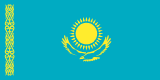
Kazakhstani culture blends Turkic nomadic heritage with Russian, Soviet, and Central Asian influences, and — among younger generations — growing cosmopolitan openness. Hospitality (konakzhai) is a core value: guests are welcomed with tea, sweets, and often an improvised meal, and refusing repeated offers before accepting is normal. The shanyrak (the crown of a yurt) symbolizes family and home, and appears on the flag. Three-generation households and strong extended-family networks are common. Food culture is rich: beshbarmak (horse or lamb with flat noodles), kazy (horse sausage), manty, plov, and kumis (fermented mare's milk) are national dishes. Nauryz (March 21-22, the spring equinox) is the most important national holiday, celebrating the Kazakh New Year with communal feasts and traditional games. Tea is served continuously at any gathering — strong black tea with milk and salt in rural areas, with sugar and sweets in urban settings. Almaty has a strong cafe, design, and start-up culture; Astana's scene revolves around theater, opera, and flagship public spaces.
- •Accept tea (shai) when offered; it is the universal hospitality gesture. In traditional settings, the youngest person pours and refills for elders and guests.
- •Use respectful forms of address. 'Salem' (hi) is informal; 'Salametsiz be' (Kazakh) or 'Zdravstvuyte' (Russian) is formal. Add '-agai' (male elder) or '-apai' (female elder) to show respect.
- •When visiting homes, remove shoes at the entrance. Hosts often provide slippers. Bring a small gift: sweets, chocolate, or flowers (odd numbers for celebrations, even numbers for funerals only).
- •Nauryz is celebrated city-wide with public concerts, yurts erected in main squares, nauryz kozhe (a traditional seven-ingredient soup), and hospitality from strangers. Join in.
- •In business, Kazakh and Russian are used interchangeably; business cards often have both sides (one in Kazakh/Russian, one in English). Punctuality is valued in multinationals; flexibility is expected in more traditional settings.
Local Administrative Requirements
Temporary Registration (Address Registration)
As of 1 July 2026, entrants from visa-free countries register within 30 calendar days of crossing the border through the new digital Migration Police Information System (IS MP), with the host or landlord confirming the address in-app and an electronic registration certificate issued automatically. Re-registration is required within 5 working days of any address change. Hotels register guests automatically.
IIN (Individual Identification Number)
A 12-digit identifier issued by Kazakhstan's Public Service Centers (PSC / TsON / Гос.корпорация "Правительство для граждан"). Required for foreigners working, owning property, operating a business, or accessing most eGov services. Processed at PSC centers with passport and visa.
EDS (Electronic Digital Signature)
Issued by the National Certification Authority (NCA/NUC), the EDS is required to authenticate into eGov.kz, file taxes, sign documents digitally, and access most online government services. Issued to IIN holders at PSC centers or remotely via eGov Mobile with biometric verification.
Bank Account
Opening an account requires passport, visa, IIN, and sometimes proof of address or a work contract. Major banks include Halyk Bank (largest, most foreign-friendly), Kaspi Bank (dominant digital/retail), ForteBank, Jusan Bank, Freedom Bank, and Bank CenterCredit.
Travel & Mobility
Mobility & Exploration
Getting Around
Almaty has a short metro line (11 stations, growing), extensive bus and trolleybus networks, and the BRT (Bus Rapid Transit) system along key corridors. Astana has modern bus and BRT networks; the Astana LRT light rail project is under construction. Ride-hailing via InDrive, Yandex Go, and Uber is widely used. Within cities, the Onay card provides unified transport payment. Almaty's unique advantage is the Shymbulak ski resort and the Medeu skating rink, both accessible by cable car and bus from central Almaty — you can ski after work in winter. Intercity travel options include Air Astana, FlyArystan (low-cost), SCAT Airlines, and QazaqAir connecting Almaty, Astana, Shymkent, Atyrau, Aktau, and regional cities. The Talgo high-speed trains operate between Almaty and Astana (about 12-14 hours overnight) and Almaty-Shymkent. Driving distances across Kazakhstan are enormous — Almaty to Astana is roughly 1,200 km by road. Winter road conditions in northern and central Kazakhstan require winter tires and serious preparation.
Connections
Almaty International Airport (ALA) is Kazakhstan's busiest hub, with direct flights to Istanbul, Dubai, Doha, Frankfurt, Amsterdam, London, Beijing, Seoul, and Bangkok. Astana's Nursultan Nazarbayev International Airport (NQZ) is the second hub, serving Europe, Asia, and the Gulf. Air Astana is the flag carrier and Star Alliance partner; FlyArystan is the low-cost subsidiary; SCAT Airlines serves regional routes. International carriers include Turkish Airlines, Lufthansa, KLM, Emirates, Qatar Airways, and major Chinese and Korean airlines. Flight time from Almaty to Istanbul is roughly 5 hours; to Frankfurt, 6 hours; to London, 7 hours. Kazakhstan's geographic position makes it a natural transit point between Europe and East Asia.
Exploration
Kazakhstan's natural and cultural variety is extraordinary. The Tien Shan mountains around Almaty — Big Almaty Lake, Charyn Canyon, Kolsai Lakes, Kaindy Lake with its submerged forest, and the Shymbulak ski resort — are world-class. Further east, the Altai Mountains offer pristine wilderness and the UNESCO-listed Berel royal burial mounds. Western Kazakhstan near Aktau holds the surreal Mangystau landscapes — Bozzhyra, Torysh (Valley of Balls), and underground Sufi mosques carved into chalk cliffs. The Baikonur Cosmodrome remains the world's oldest operational space launch facility; visits are possible through licensed tour operators. The Silk Road cities of Turkestan (home to the UNESCO-listed Khoja Ahmed Yasawi Mausoleum) and Taraz preserve deep Central Asian heritage. Astana itself offers modern architectural landmarks (Bayterek, Khan Shatyr, Nur Alem). Nomadic traditions — eagle hunting, yurt stays, horse trekking — are accessible through rural tourism operators.
Important Considerations
Extreme Climate: Astana has one of the coldest capital-city winters on earth, with January averages of -15C and regular -30C to -40C stretches. Almaty is milder but still snowy. Insulated boots, a down parka rated to -30C, and layered gloves are essential for Astana; plan summer visits for June-September.
Air Quality in Almaty Winter: The city sits in a valley and traps smog from coal-fired heating in surrounding areas. November through March can bring hazardous AQI days. Invest in a HEPA air purifier.
Distances: Kazakhstan's scale means internal travel planning matters. Almaty to Astana is a 1.5-hour flight or 12-hour train. Regional oil cities (Atyrau, Aktau) are most practically reached by air.
Russian Language Reality: While Kazakh is the state language and rising, Russian remains the dominant working language outside AIFC and oil-and-gas multinationals. Basic Russian dramatically smooths daily life; many government-facing roles require it.
Capital Controls (Light but Present): Outward transfers above USD 50,000 equivalent may trigger reporting or documentation requirements. The AIFC regulatory environment is much more liberal.
Common Mistakes to Avoid
Confusing Kazakhstan with Russia. Despite widespread Russian language and Soviet-era infrastructure, Kazakhstan is a distinct Turkic-Muslim-majority country with its own language, identity, and foreign policy. The distinction matters to Kazakhstanis.
Skipping registration. Missing the three-working-day migration deadline triggers fines and exit complications. Hotels handle it automatically; longer-term residents must register via landlord or eGov.
Underestimating winter. Astana and northern Kazakhstan have some of the harshest urban winters on earth. Arriving in November without proper gear is miserable and potentially dangerous.
Ignoring Kaspi.kz. You can technically function without it, but 90% of daily commerce (shopping, taxis, utilities, splitting dinner) assumes Kaspi. Install it in your first week.
Photographing military or government installations. Baikonur Cosmodrome in particular requires pre-arranged permits for any photography.
Service Directory - Kazakhstan
Immigration Lawyers
Legal assistance for work permits, AIFC participation, Neo Nomad Visa, and corporate immigration.
Real Estate Agents
Platforms and agencies for rentals and purchases in Almaty, Astana, and regional cities.
Accountants & Tax Advisors
Experts on Kazakhstani personal and corporate tax, AIFC structures, and cross-border planning.
Moving Companies
International and domestic relocation services with customs expertise.
Language Tutors
Kazakh and Russian language instruction for foreign professionals.
Healthcare Providers
Major private clinics and international-standard medical providers.
Job Placement Agencies
Recruitment platforms and firms connecting professionals with Kazakhstani employers.
Emergency Services
Unified Emergency Number
All-in-one emergency number for police, fire, and ambulance. Operational nationwide; operators speak Kazakh and Russian, with growing English capability in major cities.
Police
Direct police emergency line. Operators speak Kazakh and Russian; English proficiency varies.
Ambulance
National ambulance service. Response times in major cities (Almaty, Astana) are generally reliable; rural response varies significantly.
Official Sources & Further Reading
eGov.kz (Government Services Portal)
Kazakhstan's unified digital government portal for all online services: tax, IIN, EDS, property, vehicle, migration. The central hub of Kazakhstani digital life.
Ministry of Foreign Affairs
Authority for visa matters, consular services, and international agreements. Maintains embassy directory and entry requirements.
Ministry of Labour and Social Protection (Enbek.kz)
Handles work permit quotas, labour market information, and social protection programs including pension and social health insurance.
Astana International Financial Centre (AIFC)
Special jurisdiction operating under English common law with streamlined visa, tax, and regulatory regime. Relevant for fintech, asset management, and international consulting.
Ministry of Internal Affairs — Immigrant Registration Rules (Order No. 923)
Official legal text of the Rules for Registration of Immigrants in the Republic of Kazakhstan, effective 1 July 2026, governing registration through the Migration Police Information System (IS MP).
Law of the Republic of Kazakhstan No. 326-VIII (24 June 2026) — Electronic Entry Permit
Official gazette text (Әділет) of the law amending the Law on Migration of the Population: defines the electronic entry permit (QazETA) and its fee, makes the permit the basis for entry and transit from 25 August 2026, and introduces biometric identification for a digital immigrant profile.
Consular Services
For consular assistance, passport services, and official guidance related to Kazakhstan, consult the Ministry of Foreign Affairs of Kazakhstan or a Kazakhstani embassy or consulate abroad.
Related Country Guides
Similar destinations you might also consider.


Prepare for the practical steps
Read the Field Guide for help with documents, housing, banking, and the administrative steps behind a move to Kazakhstan.
Read the Field Guide